How We Took a Local Business from Page 5 to #1 on Google Maps
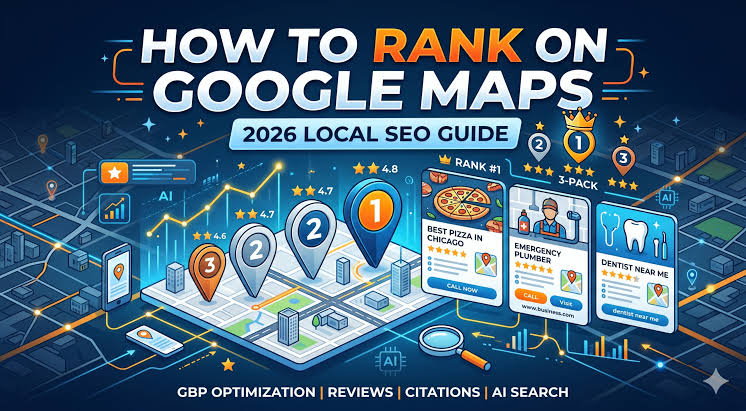
A Complete Local SEO Case Study
Ranking on Google Maps is no longer optional for local businesses. Whether you own a plumbing company, law firm, dental clinic, HVAC business, restaurant, or home service company, your customers are searching on Google every day. The businesses that appear in the Google Maps 3-Pack receive the majority of clicks, phone calls, website visits, and direction requests.
The challenge is that thousands of businesses are competing for the same local keywords.
Many business owners believe they simply need more reviews or a better website. While those factors help, they are only part of a much larger Local SEO strategy.
In this case study, we'll explain how we helped a local business move from Page 5 of Google Maps to the #1 position using ethical, long-term Local SEO techniques. The strategies discussed here can be applied to almost any local business that wants sustainable growth.
The Challenge
When the client contacted us, their business had several problems:
- Ranked beyond Page 5 for most target keywords
- Very little visibility in Google Maps
- Inconsistent business information across the web
- Poor Google Business Profile optimization
- Weak local authority
- Very few local citations
- Limited customer reviews
- Almost no local backlinks
Despite offering excellent services, potential customers simply couldn't find them online.
This is a common issue for many local businesses.
Google doesn't rank businesses solely based on quality. It ranks businesses based on relevance, distance, prominence, trust, and authority.
Our goal was simple:
Increase local visibility and achieve a top position on Google Maps for the client's primary keywords.
Step 1: Complete Local SEO Audit
Every successful campaign begins with research.
Before making any changes, we performed a detailed Local SEO audit.
We analyzed:
- Google Business Profile
- Website structure
- Technical SEO
- NAP consistency
- Existing citations
- Competitor profiles
- Review profile
- Local backlinks
- Keyword rankings
- Google Maps visibility
This audit revealed dozens of opportunities that competitors were already taking advantage of.
Without a proper audit, Local SEO becomes guesswork.
Step 2: Google Business Profile Optimization
Google Business Profile is one of the strongest ranking factors for local searches.
We completely optimized the client's profile.
This included:
- Correct business categories
- Keyword-optimized business description
- Service updates
- Business hours
- High-quality images
- Service areas
- Products and services
- Business attributes
- Regular Google Posts
- FAQ optimization
We also ensured every field was completed correctly.
Many businesses leave important sections blank, reducing their ranking potential.
Step 3: Fixing NAP Consistency
NAP stands for:
- Name
- Address
- Phone Number
Google expects this information to be identical across the internet.
The client had multiple versions of their business information on different directories.
For example:
ABC Plumbing LLC
ABC Plumbing
ABC Plumbing Services
Different phone numbers
Different addresses
These inconsistencies reduce Google's trust.
We corrected every citation and standardized the NAP information across major directories.
Step 4: High-Quality Citation Building
Citations remain one of the foundations of Local SEO.
Instead of creating hundreds of low-quality listings, we focused on authoritative and niche-relevant directories.
Our strategy included:
- Major business directories
- Local business directories
- Industry-specific directories
- Chamber of Commerce listings
- Data aggregators
- Local community websites
Each citation included:
- Consistent NAP
- Business description
- Categories
- Website URL
- Photos
- Business hours
High-quality citations strengthened Google's confidence in the business.
Step 5: Social Profile Optimization
Many people underestimate social profiles.
Although they are not direct ranking factors, they strengthen a business's online presence.
We optimized profiles across multiple platforms using consistent branding.
Every profile included:
- Business logo
- Cover image
- Website
- Contact information
- Business description
- Keywords
- Service details
Consistency across platforms sends positive trust signals to search engines.
Step 6: Web 2.0 Authority Building
We created high-quality Web 2.0 properties that supported the client's online authority.
Each property included valuable content rather than keyword stuffing.
These properties helped:
- Increase branded searches
- Improve entity recognition
- Strengthen topical relevance
- Diversify the backlink profile
Quality always outperformed quantity.
Step 7: Google Map Point Optimization
One often-overlooked Local SEO strategy is map point optimization.
We created geographically relevant map points that reinforced the business location and service areas.
This helped Google better understand:
- Service coverage
- Geographic relevance
- Business proximity
- Local authority
Combined with citation building, this significantly improved local relevance.
Step 8: Review Strategy
Reviews influence both rankings and customer trust.
Instead of chasing large numbers, we focused on genuine customer feedback.
Our review strategy encouraged:
- Authentic reviews
- Detailed customer experiences
- Keyword-rich natural language
- Timely responses
- Continuous review growth
We also helped the client respond professionally to every review.
Google values active business engagement.
Step 9: Local Link Building
Backlinks remain one of Google's strongest ranking signals.
We focused on earning relevant local links through:
- Local blogs
- Community organizations
- Business partnerships
- Sponsorship opportunities
- Industry websites
- Local news mentions
These links increased the business's authority without violating Google's guidelines.
Step 10: Website Optimization
A strong Google Business Profile alone is not enough.
The website must support local rankings.
We optimized:
- Title tags
- Meta descriptions
- Header structure
- Internal linking
- Local landing pages
- Schema markup
- Page speed
- Mobile usability
- Image optimization
Every service page targeted a specific local keyword.
Step 11: Publishing Helpful Local Content
Content plays an important role in Local SEO.
We created articles that answered customer questions.
Examples included:
- How to choose the right service provider
- Local buying guides
- Frequently asked questions
- Service comparisons
- Seasonal tips
- Neighborhood-specific content
This improved topical authority while attracting long-tail traffic.
Step 12: Continuous Performance Monitoring
Local SEO isn't a one-time project.
We monitored:
- Keyword rankings
- Google Maps visibility
- Website traffic
- Calls
- Direction requests
- Click-through rates
- Review growth
- Citation health
Small improvements every month produced significant long-term gains.
The Results
Within several months, the business experienced substantial improvements.
Key outcomes included:
- Ranked #1 on Google Maps for primary keywords
- Significant increase in local visibility
- Higher website traffic
- More phone calls
- More direction requests
- Increased customer inquiries
- Improved online reputation
- Stronger local authority
- Better conversion rates
Most importantly, the business generated more qualified leads without increasing advertising spend.
Why This Strategy Worked
Many businesses focus on only one ranking factor.
Successful Local SEO requires multiple signals working together.
Our campaign combined:
- Google Business Profile optimization
- Citation building
- NAP consistency
- Web 2.0 properties
- Social profiles
- Review management
- Map point optimization
- Local backlinks
- Website optimization
- Helpful content
Each element strengthened the others, creating lasting results.
Key Lessons for Local Businesses
If your business isn't ranking on Google Maps, don't assume the competition is unbeatable.
Most ranking problems come from missing optimization rather than poor services.
Start with:
- A fully optimized Google Business Profile
- Consistent business information
- Quality citations
- Positive customer reviews
- Local content
- Technical SEO
- High-quality backlinks
- Regular profile updates
Local SEO is a long-term investment, but when done correctly, it delivers sustainable growth.
Final Thoughts
Moving a business from Page 5 to the #1 position on Google Maps doesn't happen overnight. It requires research, planning, consistent optimization, and a commitment to following best practices.
By combining Google Business Profile optimization, citation building, NAP consistency, review management, local link building, map point optimization, and ongoing website improvements, businesses can significantly improve their local visibility and attract more qualified customers.
If your business is struggling to rank in Google Maps, now is the time to invest in a proven Local SEO strategy. The businesses that dominate local search aren't always the biggest—they're the ones with the strongest local SEO foundation.
With the right approach, your business can earn higher rankings, increase customer trust, generate more leads, and secure long-term growth in your local market.